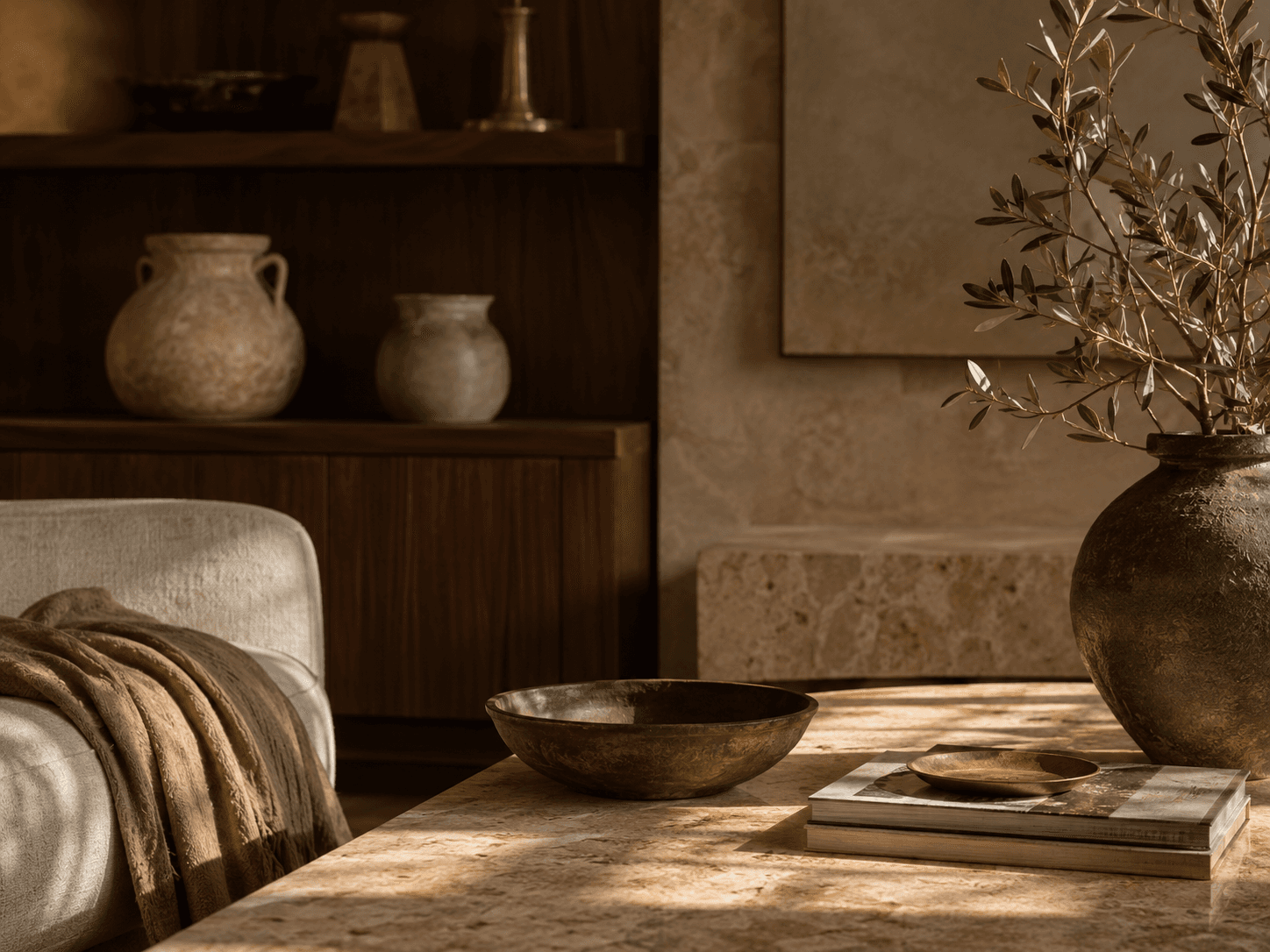
Rethinking open-plan living in contemporary homes
Category
Spatial Planning
Published
Dec 12, 2025
Posted By
Adrian Clarke — Design Director
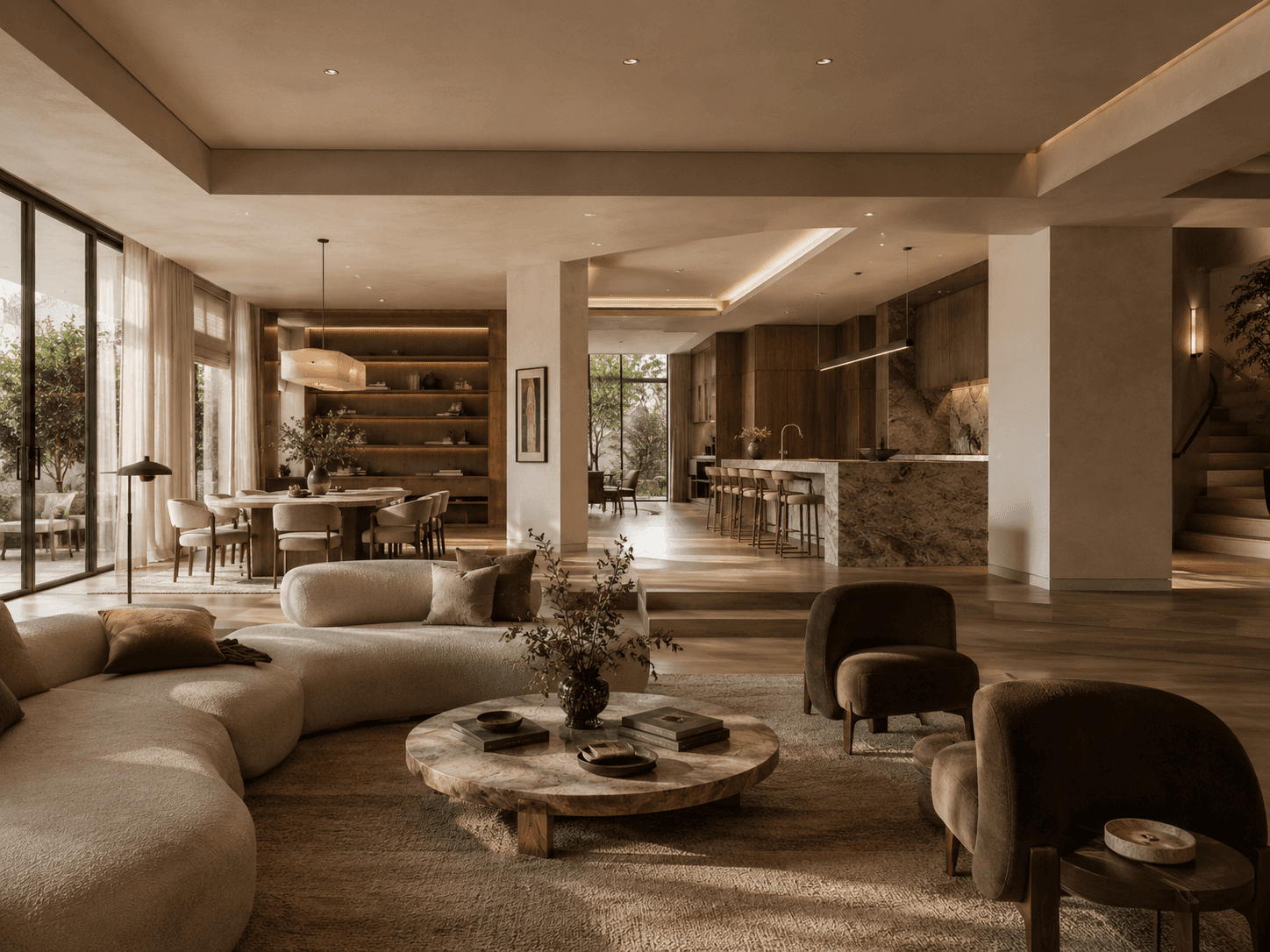
How subtle zoning, lighting, and circulation create openness without sacrificing intimacy.
Introduction
Open-plan living continues to shape contemporary residential architecture, particularly within penthouses and urban residences. Yet complete openness can sometimes lead to interiors that feel visually undefined or lacking in intimacy.
At Maison, open-plan environments are approached through careful zoning rather than complete visual uniformity.
Creating Spatial Layers
Successful open-plan spaces often rely on subtle shifts in proportion, lighting, materiality, and furniture placement to establish rhythm between functions.
Living, dining, and kitchen spaces should feel connected without appearing visually identical.
Architectural Zoning
Rather than relying on partitions, the studio often introduces softer architectural transitions — ceiling treatments, joinery volumes, lighting adjustments, and material shifts that quietly define areas without interrupting openness.
These interventions create a greater sense of intimacy while preserving continuity throughout the residence.
“Openness works best when there is still a sense of spatial rhythm and pause throughout the home.”
Balancing Social and Private Living
Contemporary homes increasingly need to support multiple forms of living simultaneously — entertaining, remote work, quiet retreat, and family routines.
Thoughtful zoning allows spaces to adapt naturally to these changing patterns without becoming overly rigid.
Closing Thoughts
For Maison, open-plan living is less about removing boundaries entirely and more about designing continuity thoughtfully.
The most successful spaces feel open yet grounded, connected yet calm.